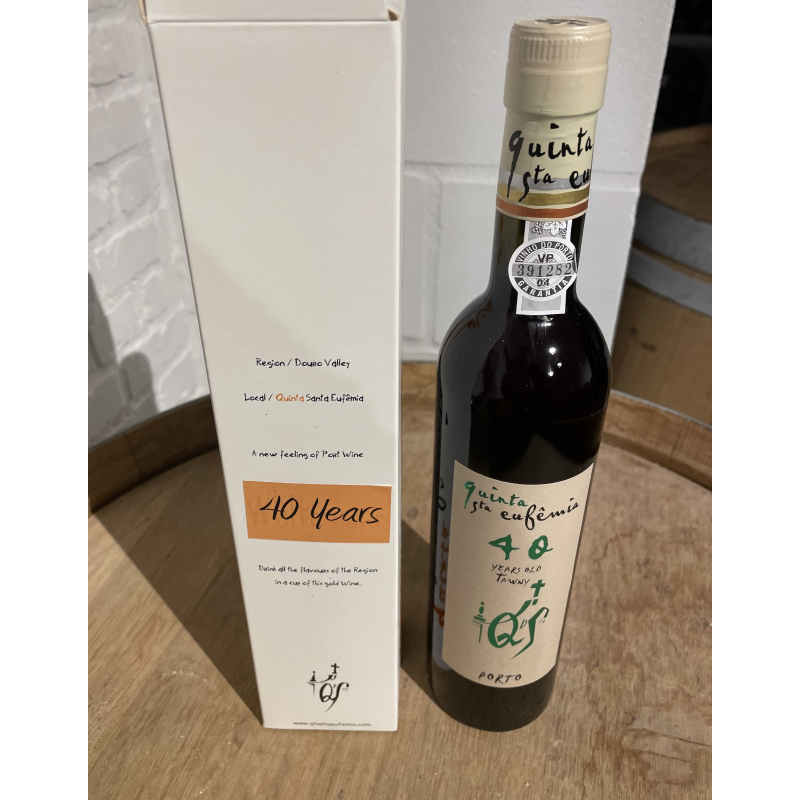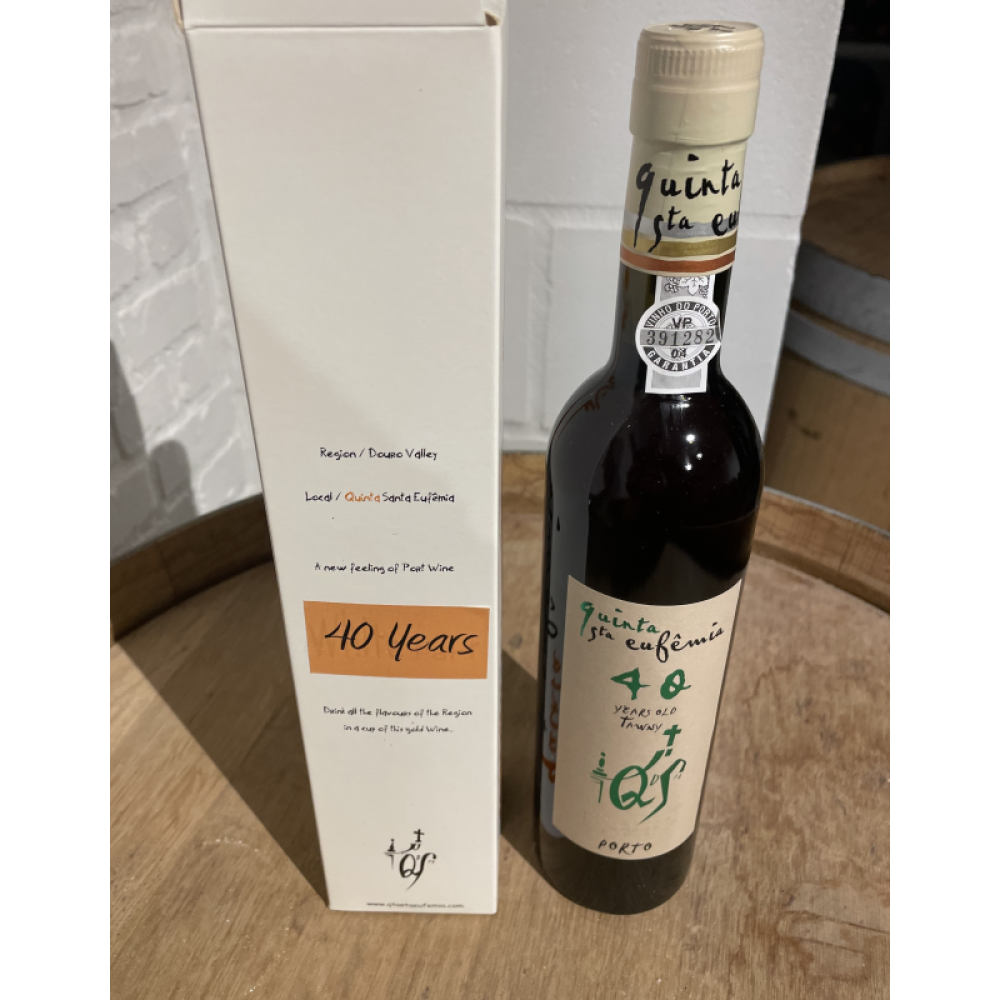
Quinta Santa Eufémia - 30Y 50cl tawny old port
Description
A luxurious, richly flavored Tawny Porto with at least 30 years of cask aging, showing a deep chestnut-brown color with elegant green highlights, typical of long-oxidized port. The nose is complex and refined, with aromas of dried fruits, nuts, apricots, and exotic wood, subtly combined with soft spices and a hint of sweet caramel — an expression of many years of oak aging. On the palate, this Porto continues its impressive character: an intense and complex palette of dried fruits (raisins, plums), nuts, and apricots, derived from long cask aging. The taste is warm and harmonious, with a very long, persistent finish where the depth of the bouquet, subtle sweetness, and gentle spices converge. Comes in a gift box.
 4.5/5 Vivino
Serving suggestions:
- Dark chocolate and chocolate desserts
- Roasted nuts and almonds
- Foie gras
- Aged cheeses
- Fruit tarts with apricots or figs
This Tawny shows at its best with richly flavored desserts or as a refreshing digestif after a long meal. Serve at 14–16 °C to fully express the aromas and present the complex flavors harmoniously.
Storage:
This 30-year-old Tawny is already at its peak at bottling and will evolve very little in the bottle. The many years of cask aging are the primary driver of its complexity. It can still be stored for several years, but it is especially magnificent to open and enjoy now.
Additional information:
 Red and white port is made from several grape varieties; around 80 are in use. All grow on the steep slopes of the magnificent Douro Valley in Portugal. The prince of port grapes is Touriga Nacional, but due to its naturally low yield, it is rarely replanted. Other excellent varieties include Tinta Roriz (Tempranillo), Tinta Barroca, Touriga Francesa, Tinta Cão, and Tinta Amarela. White port varieties include Malvasia Dorada, Malvasia Fina, Gouveio, and Rabigato.
Porto is what we call a fortified wine, meaning fermentation is halted early by adding wine alcohol. This technique ensures not all sugars convert to alcohol, creating the sweet flavor of port.
The quality of a port is defined by the balance of fruit, flavor, and alcohol. A good port is never recognized by a burning sensation but by a present and complex mouthfeel.
The quinta (independent wine estate) of Santa Eufémia was founded in 1894 by Bernardo Rodrigues de Carvalho and is located on the left bank of the Douro at 300 m elevation between Peso da Régua and Pinhão, in the heart of the world’s oldest recognized wine region: the Douro. The estate has 40 ha of vineyards comprising all the typical grape varieties for port wines. The slate soils and terraced vineyards form the typical landscape. Casa Santa Eufémia produces port gems according to the traditional method, with a characteristic touch from the Carvalho family, who have managed the estate since its foundation. Casa de Santo Eufemia is currently led by Pedro Carvalho. Due to low production, this port is rarely seen outside Portugal, but within Portugal, it stands out for its top quality and is highly appreciated.
Reviews (0)
Related Products
New